Motivation
The goal of Project Karman at Northeastern was to be the first collegiate rocketry team to pass the Von Karman line. Within the bounds of funding and manufacturing constraints it was found that a two stage rocket architecture would be favorable. This requires igniting a second solid fuel motor mid flight reliably, with precision timing. Achieving reliability and precision required further information about the ignition temperature of our solid fuel ammonium perchlorate motors and the heat output of our available ignitors.
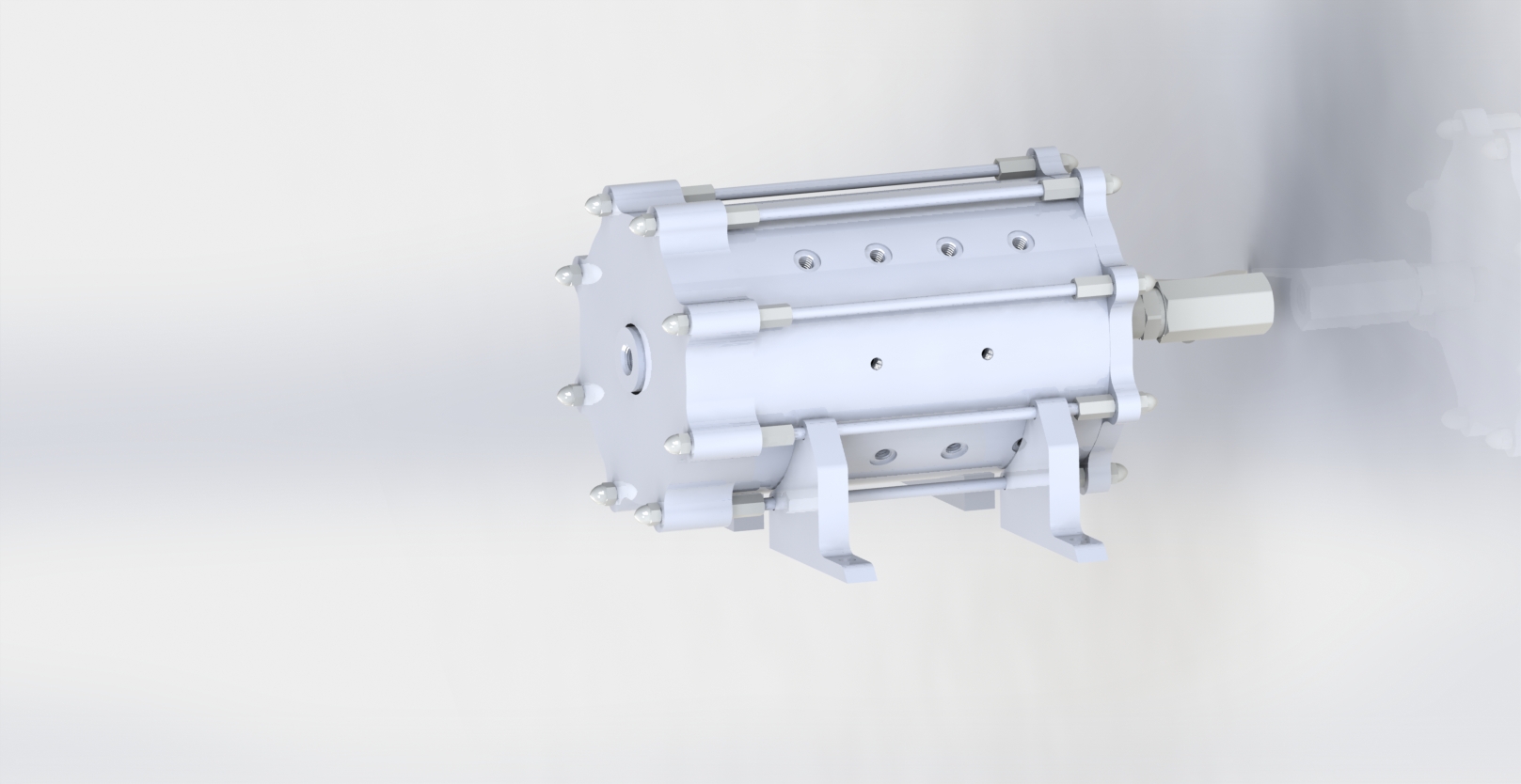
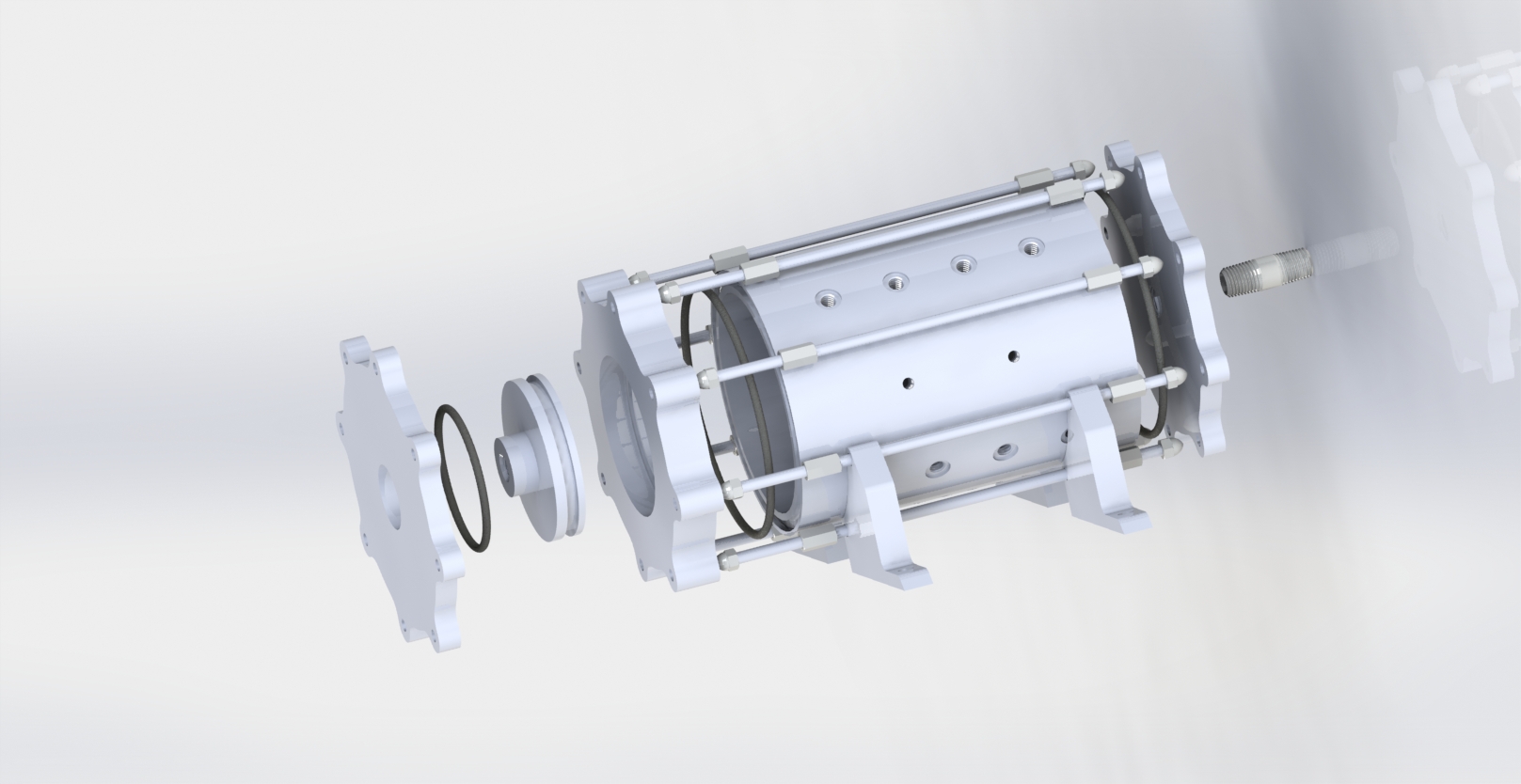
Assembled and exploded view of the bomb calorimeter design
Design
The construction of a bomb calorimeter would enable us to emperically measure the properties of interest. This vessel would provide a constant volume in which ignitors could combust, heating up the surrounding air which would expand and escape through a tube sheathed in water at the end of the calorimeter, heating up the water. Given that the second stage ignitoin event would occur at an atmospheric pressure below 1 atm, we designed the vessel to be able to pull a vacuum, enabling representative ignition tests.
The vessel featured a number of side ports through which intsturmentation, such as thermocouples, could be installed.
Hoop and raidal stress analysis was performed to determine adequate wall thickness. Axial stress analysis informed the size and quantity of threaded rods which mounted the end caps.
Unfortunately the manufacturing of this design was cut short by school evictions relating to covid.