Motivation
I love analog machines, especially ones that let me cruise winding mountain roads at sunset, serenaded by the roar of thousands of controlled explosions a minute. A carburated inline 4 engine with a points ignition system is about as analog as a car can get and it carries with it beauty in its simplicity and ease of maintenence. These factors (and because it just looks so sleek) brought me to love the BMW 2002 and choose to purchase one that had a failing 2nd gear transmission.
Transmission Repair
The transmission was able to engage second so long as you had the RPMs matched between the engine and trans and were very gentle. This usually indicates an issue with the synchronizer rings. Given the age and unknown mileage on this vehicle it seemed entirely reasonable that normal wear may have reduced the engagement of the second gear ring requiring its replacement. This would make for a fairly straightforward if tedious repair that gave me the opportunity to crack open a 4 speed manual gearbox.
The Problem
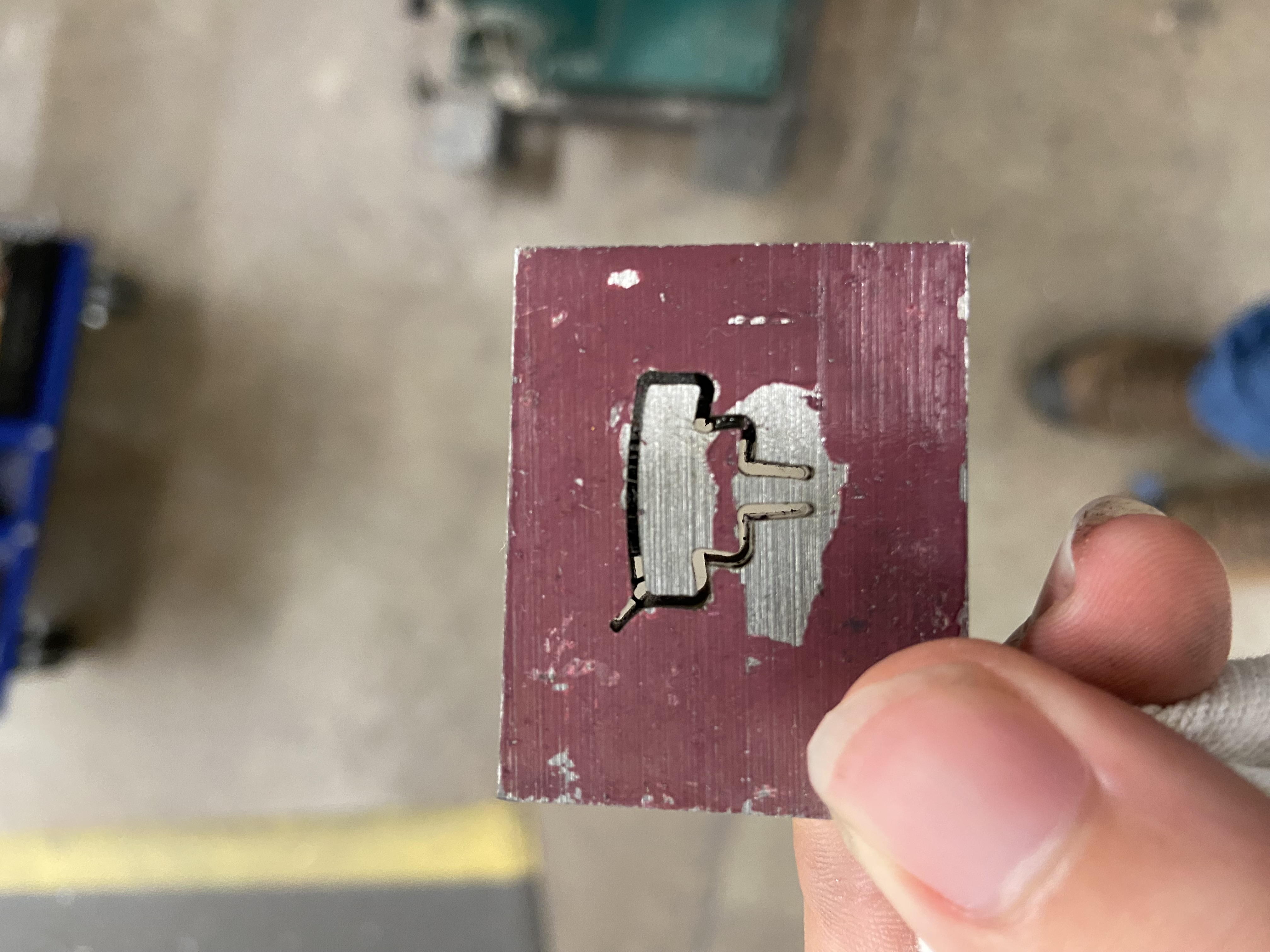
Upon opening the synchronizer assembly for 2nd gear, I found that this T shaped part had sheared into 3 pieces. This part's function is to gradually force engagement of the synchronizer wear surface with the engaging gear shaft, gracefully matching the RPM of the meshing gears. Clearly this would explain my transmission's rough engagement.
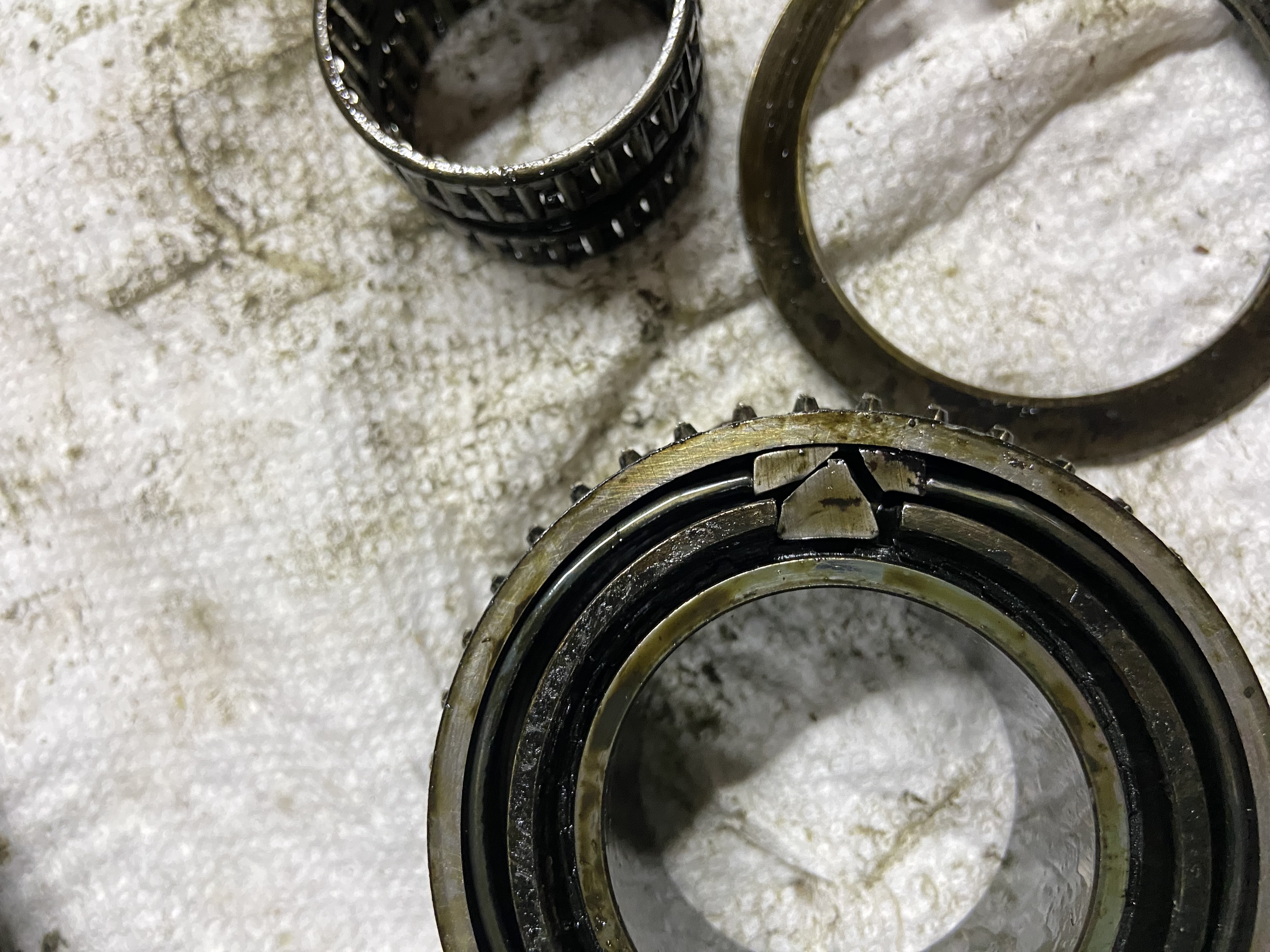
A correctly functioning synchronizer T jam
This part could not be sourced so I resolved to make a new one. Luckly the same T part was used in the other gears' synchronizer systems so I could use them for reference geometry. The T was a planar extrusion, so I was able to scan the part using a 3D scanner at Formlabs and waterjet a replacement out of D2 toolsteel. This enabled it to be air hardened, reducing the likelyhood that this failure mode would occur again.